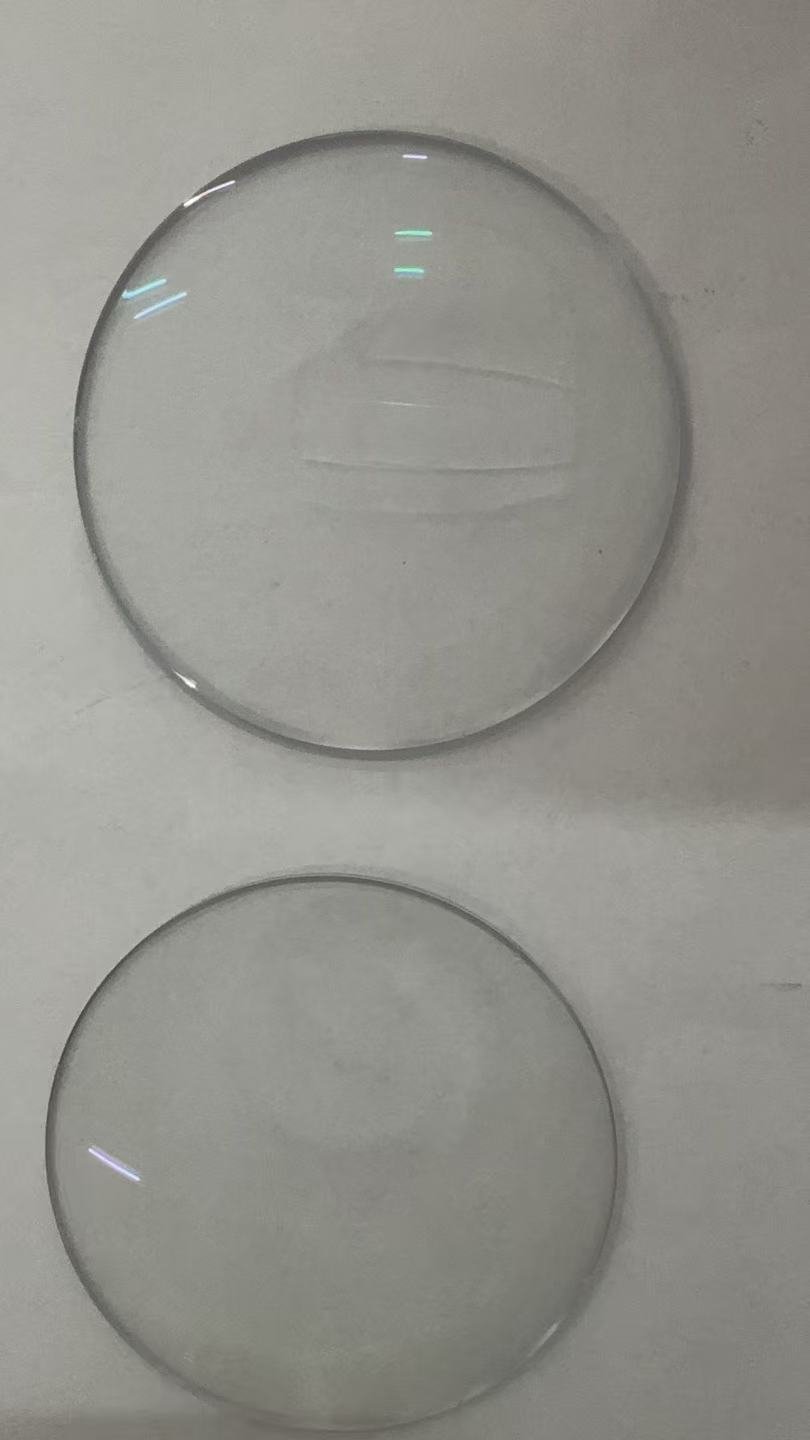
A bifocal with a straight-edged reading segment.
The flat-top segment gives laboratories a distinct geometry from round-top bifocal while serving the same broad presbyopic role. The two designs should remain separately specified.
A flat-top bifocal lens option with a straight upper edge on the near segment. It is designed for conventional presbyopic correction and is not a progressive lens.
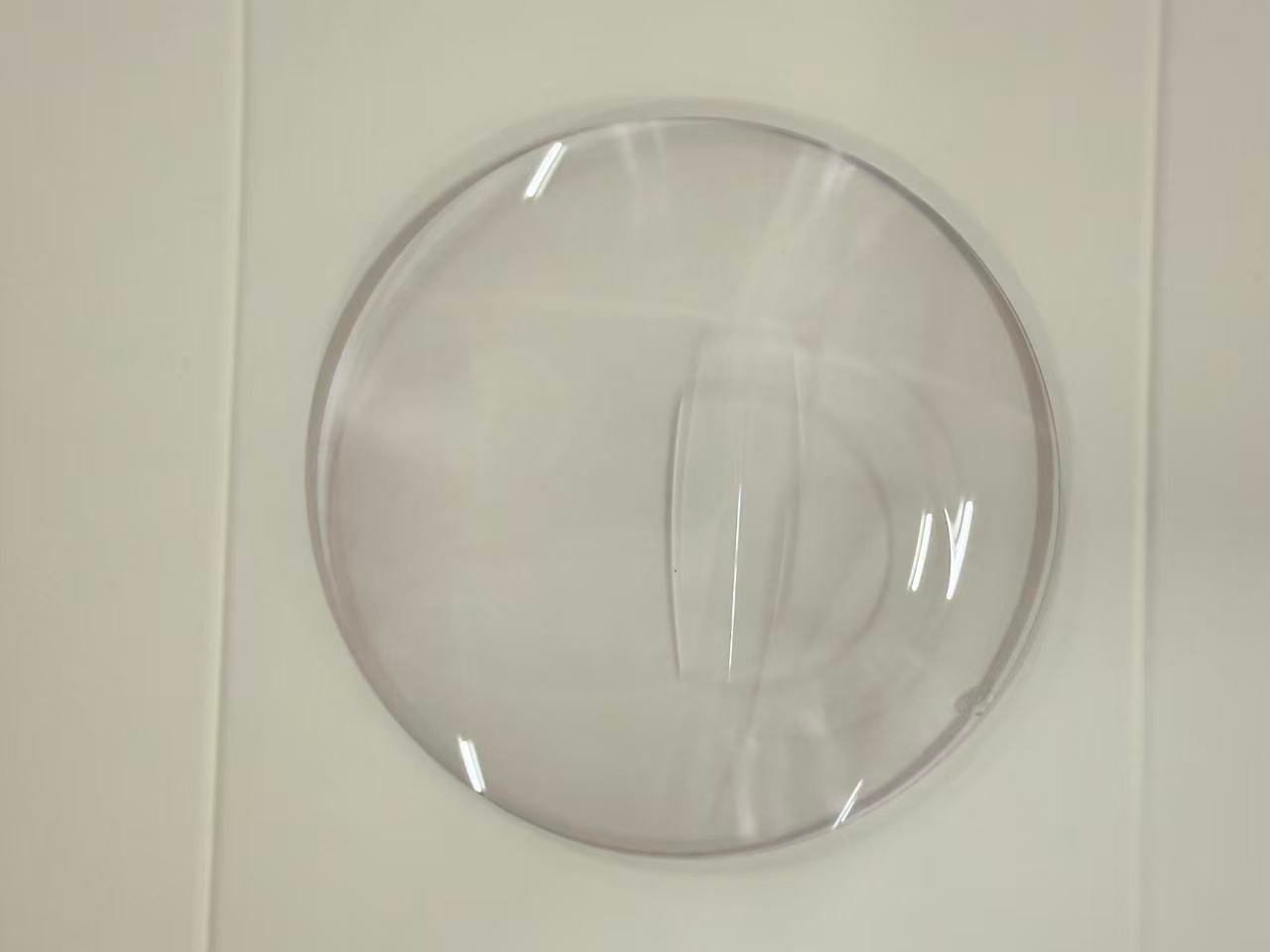
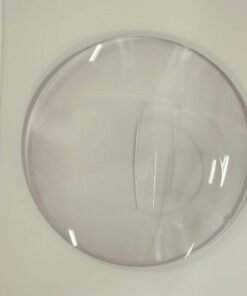
Representative lens image. Final material, coating, tint, base curve and appearance depend on the confirmed order specification.
Verified product essentials
| Design | Flat-top bifocal |
| Reference ADD | +0.50 to +3.50 |
| Stock reference | SPH +2.00 to -3.00 for the stated stock program |
| Materials | 1.49 and 1.56 polymer options |
| Format | Stock finished lenses; lab semi-finished blanks quoted separately |
| Near segment | Straight upper edge; no progressive corridor |
How to choose this product
Choose flat-top bifocals for a clearly defined near segment and a familiar laboratory workflow in conventional bifocal programs.
Specification boundaries
- Do not list corridor sizes; flat-top bifocal lenses do not have a progressive corridor.
- Semi-finished specifications are based on blank geometry and ADD.
- The actual near-zone layout depends on the confirmed blank design.
Ordering, samples and packaging
MOQ
Typical mixed-order minimum is 100 pairs. Individual stocked powers commonly require around 50 pairs; availability is confirmed before order acceptance.
Samples
5–10 sample pairs can be offered free of product charge. The buyer pays freight or supplies a freight-collect account. Sample availability is confirmed by specification.
Packaging
Standard white packaging is available. Private-label and anti-counterfeit marking can be discussed subject to artwork, quantity and production approval.
Quality and evidence
ShenHai Optical manufactures at its Danyang production site and controls incoming material, production, optical inspection and packing checkpoints. Product-specific testing under the applicable ISO 8980 or ISO 10322 scope is confirmed on the quotation or report rather than inferred from the material alone.
See the quality-control workflow · View company and certification status
Buyer questions
Is this a progressive lens?
No. It is a bifocal lens with a separate near segment and no progressive corridor.
Can you supply both round-top and flat-top?
Yes. They are listed as separate designs so buyers can compare the segment shape and laboratory preference.
Flat-top bifocal geometry
The near segment has a straight upper edge. It is a bifocal design, not a progressive lens, and therefore has no progressive corridor. The relevant specification is the blank or finished-lens geometry, ADD, power range and treatment.
What to compare with round-top
Compare the segment shape, fitting preference, available diameters, base curves and downstream processing. The optical function can be similar while the visual appearance and lab workflow are not identical.
Order confirmation
- Round-top or flat-top design
- Finished or semi-finished format
- ADD and power range
- Base curve and diameter for blanks
- Coating and packing
- Evidence scope by format
Treatment options and claim boundaries
The current product file discusses anti-reflection, anti-radiation, super-hydrophobic, inner-coating, wear-resistant and HC hard-coat treatments, together with blue or green coating appearance and selected blue-light, photochromic or polarized programmes.
Confirm the exact stack for the ordered SKU
Availability depends on the material, lens design, coating supplier, production route and requested performance. A quotation should name the actual treatment rather than only saying “coated”.
Two claims that remain separate
A blue or green coating appearance does not automatically prove blue-light blocking. A material described as impact-oriented does not prove that every finished lens meets a particular impact standard. Each claim requires the matching specification, material data or product test.
More technical questions
What distinguishes flat-top from round-top?
The visible upper edge of the near segment is straight instead of curved. Both remain bifocal designs.
Can one bifocal report cover a single-vision lens?
No. Product design and format belong to the evidence scope and must not be inferred across different products.
Check the related buying decisions
Documents and test evidence
Download the technical data sheet for this family, open the issued test report where one exists, and check the evidence matrix before you quote the product to your customer.
TDS
Technical data sheet · TDS-FTBSpecification, power reference, MOQ, samples, packing and Incoterm.Download PDF
EVI
Test status: not in Batch 1See the evidence matrix for what is covered and what is scheduled.Open evidence matrix
CAT
2026 product catalogueAll lens families, factory and packaging overview.Download PDF
No report in Batch 1. Bifocal designs need their own test scope; single-vision reports are not applied to bifocals.
Related products
Lenses
Lenses